



EPS vs PU surfboards: which foam is right for you?
We build in both and we repair both. Here is how the two foams differ in the water, on the scales and when they get dinged.

Short answer: neither foam is better. A PU (polyurethane) surfboard glassed with polyester resin sits lower in the water and feels smooth and predictable; an EPS (expanded polystyrene) board glassed with epoxy is lighter, floats higher and feels lively. The right one depends on where you surf and what you like under your feet.
When you order a custom board from us, the foam is one of the first choices. We build in both and repair both, so here is the longer answer we give at the counter, written down.

What the letters mean
PU is polyurethane. It is the traditional surfboard foam: dense, fine-celled and easy to shape by hand. A PU blank nearly always has a timber stringer glued down the centre. It is normally glassed with polyester resin.
EPS is expanded polystyrene. It is made of small beads fused together, and it is noticeably lighter than PU for the same size blank. It has to be glassed with epoxy resin, because polyester resin dissolves polystyrene. That is why people often say “epoxy board” when they mean EPS.
So the choice is really a pair: PU with polyester, or EPS with epoxy.

How they feel in the water
This is the part that matters, and it is the hardest to put numbers on.
A PU board sits a little lower in the water. It feels smooth and settled, especially when the surface is bumpy or the wind is on it. The flex is familiar to anyone who has surfed for a while, because PU is the traditional surfboard foam. Surfers often describe it as predictable: the board does what it did last time.
An EPS board floats higher for the same dimensions and weighs less. It feels lively, quick to get going and easy to throw around. In small or weak waves that extra float and spark is a real help. In strong offshore wind or heavy chop, some surfers find a light board skittish.

Joe has tested the two side by side. One of his posts from December 2024 shows a pair of fish with the caption “EPS & PU test day”. That is the most useful comparison you can make: a similar outline, a different core.
A rule of thumb
- Small, soft or slow waves: EPS earns its keep. The float helps you catch waves and keep speed through flat sections.
- Clean, powerful or hollow waves: PU is hard to beat. The weight holds a line and settles in the face.
- One board for everything: either works. Decide on feel.
- Travelling: EPS with epoxy is generally tougher against knocks, and lighter to carry.
Our Blade, a small wave performance board, has been built in EPS. Another EPS build was a 5'5" fish, posted from Main Beach in Byron in March 2026.


Durability and dings
Epoxy resin is tougher than polyester, so an EPS and epoxy board usually resists pressure dents and small knocks better. A well made one keeps looking fresh for longer.
The catch is what happens when the skin does get broken. EPS foam can take on water through an open ding, and it can travel between the beads. If you ding an EPS board, get it out of the water, let it dry properly and have it sealed. Do not keep surfing it.
PU soaks up water too, more slowly and more locally, and the foam goes brown where it has been wet. Either way, an open ding is a job for this week and not for after the next swell. There is more on that in our ding repair guide.
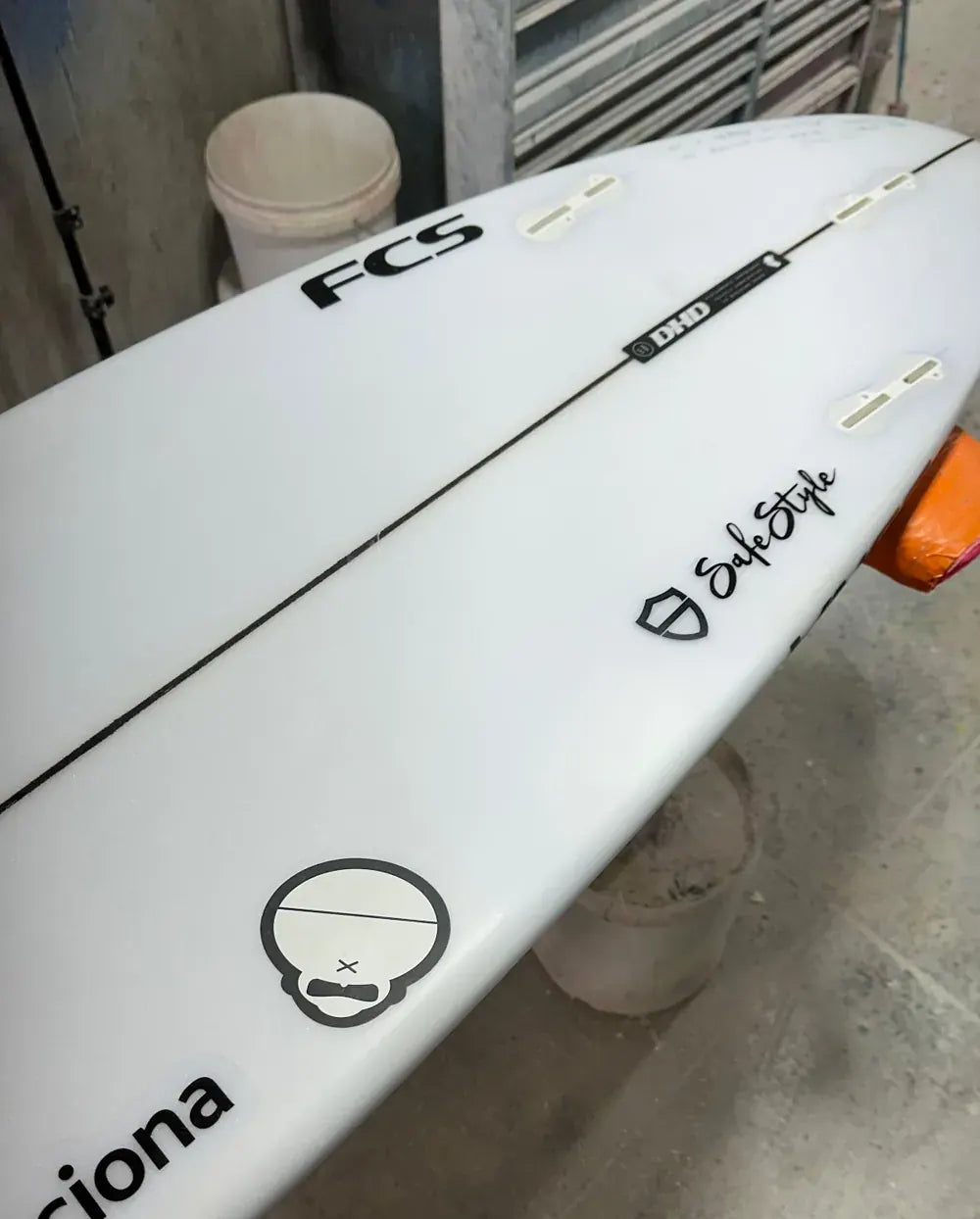
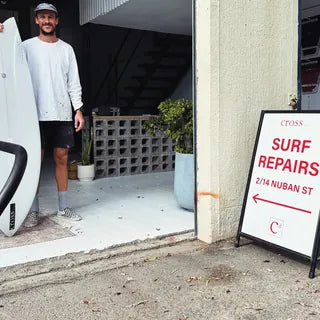
On repairs generally: both are repairable, and the shortboard repair sheet in our workshop covers PU and EPS on the same list. The one rule is that EPS must be repaired with epoxy, because polyester resin melts polystyrene. We repair any brand, in PU or EPS. The surfboard repairs page has the details.
The glass matters too
Foam is half the board. The other half is the cloth and resin over it.
Fibreglass cloth is sold by weight, in ounces per square yard. The common weights for surfboards are 4oz and 6oz. Lighter cloth makes a lighter, more responsive board that dents more easily. Heavier cloth adds a little weight and a lot of durability. A typical performance shortboard uses 4oz. Boards meant to last, and most longboards, use 6oz, at least on the deck.

Joe has used 6oz on shorter boards too. His five-fin ID model, a 5'8" for waves from about 1ft to 5ft, was “Glassed with 6Oz.” It is a choice you can make with him: tell him if you are hard on boards, or if you want the lightest thing possible and accept it will show wear.
Then there are the other cloths. Carbon Fiber is available on every model we make, alongside natural fibre cloths in hemp, flax and basalt, and each changes the flex and strength again.

How to choose
Ask yourself three things.
What do you ride now, and what would you change? If your current PU board feels heavy and slow in summer, try EPS. If your EPS board chatters when it is windy, try PU.

Where do you surf most? Soft beach breaks and summer swell favour EPS. Winter points with some push favour PU.
How do you treat your boards? If they live in the back of a ute, think about epoxy and heavier glass.
Then tell Joe. The foam is one line on the custom order, and he will talk you through it during the free consultation. Size matters as much as foam: an EPS board floats more for the same dimensions, so try the volume calculator and mention which foam you are leaning towards. If you are still unsure, ask whether there is one of each in the factory to pick up. The weight difference in your hands will tell you a lot.


