




Gelcoat and fibreglass boat repair: a plain guide
What gelcoat is, which cracks matter, and what repairs cost, plus a trailer sailer job with a worn rudder fitting and a hidden hole.
Gelcoat repair starts with one question: is the damage only in the gelcoat (the coloured, glossy outer layer), or has it gone through to the fibreglass laminate underneath? A chip or fine crack in the gelcoat alone is cosmetic but worth sealing. Exposed fibres, long stress cracks, a soft floor or movement at the transom mean the structure needs work. Send two or three photos to 0422 435 689 and Joe will tell you which you have, with a free quote.
A fibreglass boat and a surfboard are closer relatives than they look. Both are a shell of glass fibre and resin, both hate having water inside the laminate, and both get repaired with the same materials and the same patience. That is why a surfboard factory in Currumbin Waters also repairs boats, Jet Skis and surf lifesaving craft. This guide will help you work out what you are looking at before you ring anyone.

What gelcoat is
The shiny coloured surface of a fibreglass boat is gelcoat. It is a layer of pigmented resin, sprayed into the mould before the fibreglass goes in. It gives the boat its colour and gloss, and it protects the laminate underneath from water and sun.
Gelcoat is hard and brittle, and it adds little strength of its own. The strength is in the fibreglass laminate behind it, and in whatever is behind that: timber, foam or more glass.
So the first question with any damage is: gelcoat only, or laminate as well?
Reading the damage
A chip or gouge with white or coloured material at the bottom is gelcoat only. It is cosmetic, though worth sealing, because the laminate should not be left open to water.
A chip where you can see fibres, a rough matt texture, or a different colour underneath has gone through to the laminate. It needs glass, not just gelcoat.
Fine cracks in a star or spider-web pattern usually come from a single knock or from a fitting being loaded. They are in the gelcoat, but they tell you the panel has flexed. A spreading pattern means something underneath may be moving.

Long, straight or parallel cracks, especially along a chine, around the transom or where the deck meets the hull, are often stress cracks. The structure is flexing more than the gelcoat can follow. These need a proper look.
A soft or spongy floor usually means water has got into the timber or core under the glass. The floor does structural work in most small boats, so it is not a cosmetic problem.


Movement at the transom, such as cracks at the corners or the engine moving when you lean on it, is the serious one. Stop using the boat until it has been checked. We learned a lot about transoms restoring Cove: that story is in Restoring Cove.

A real job: the trailer sailer
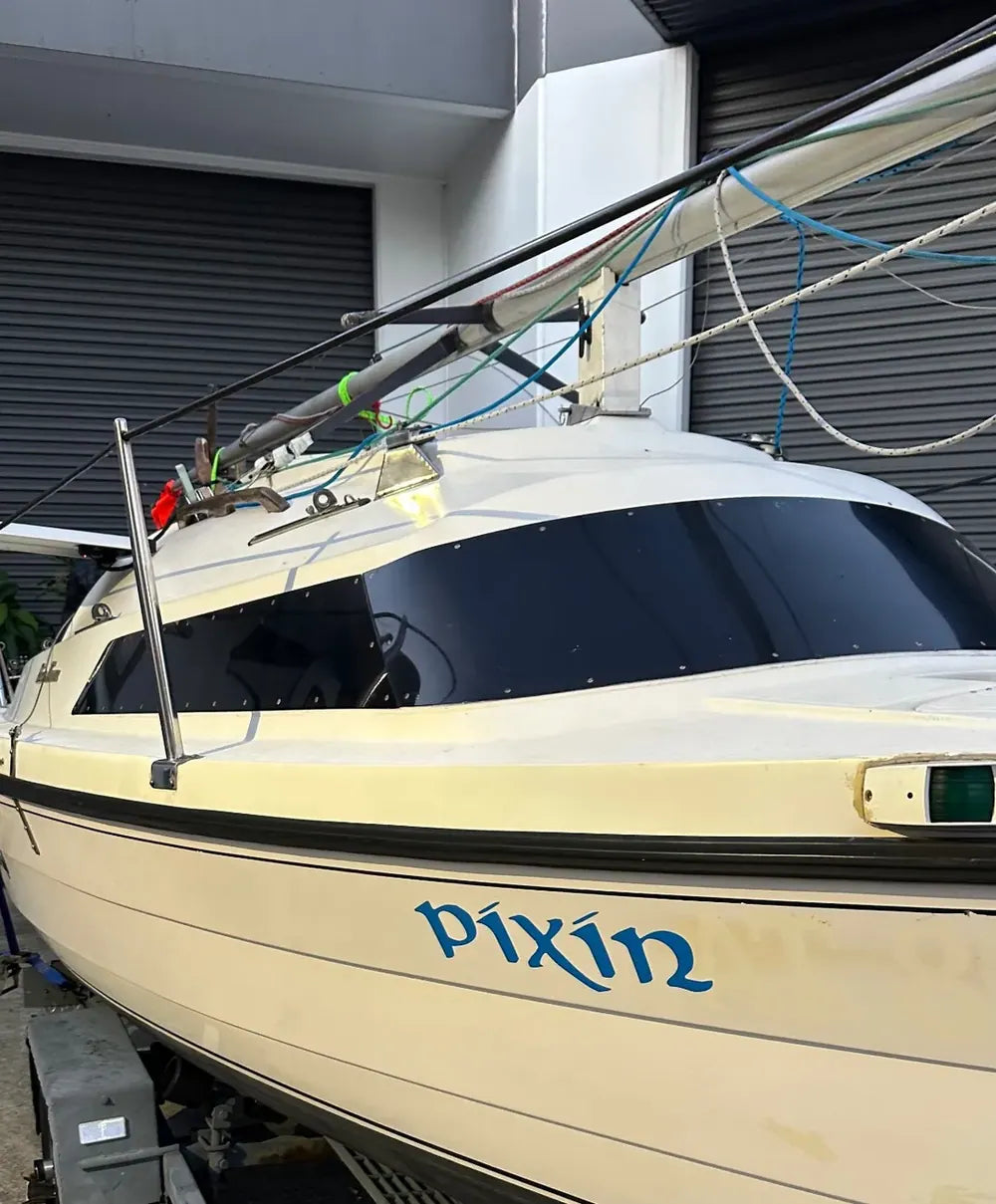
In October 2025 a customer’s trailer sailer came to the factory with a short list. Joe documented it on his story under the heading “Time for a few more boat repairs”.
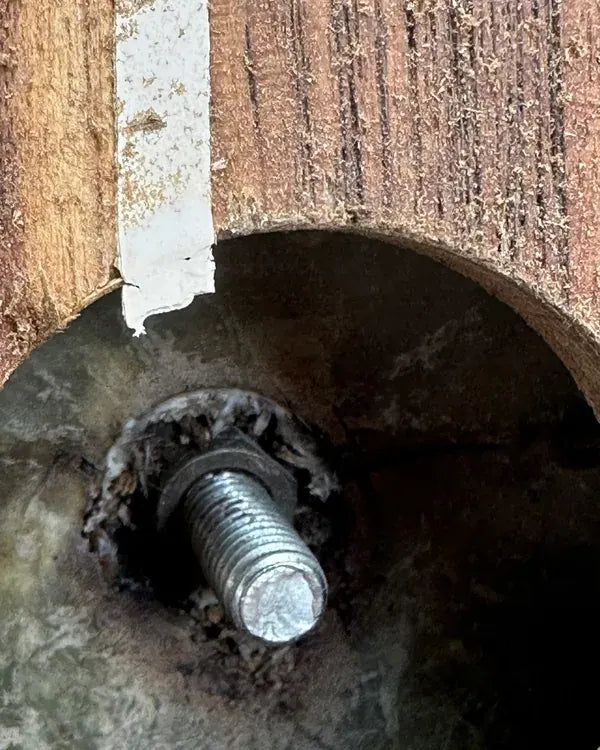
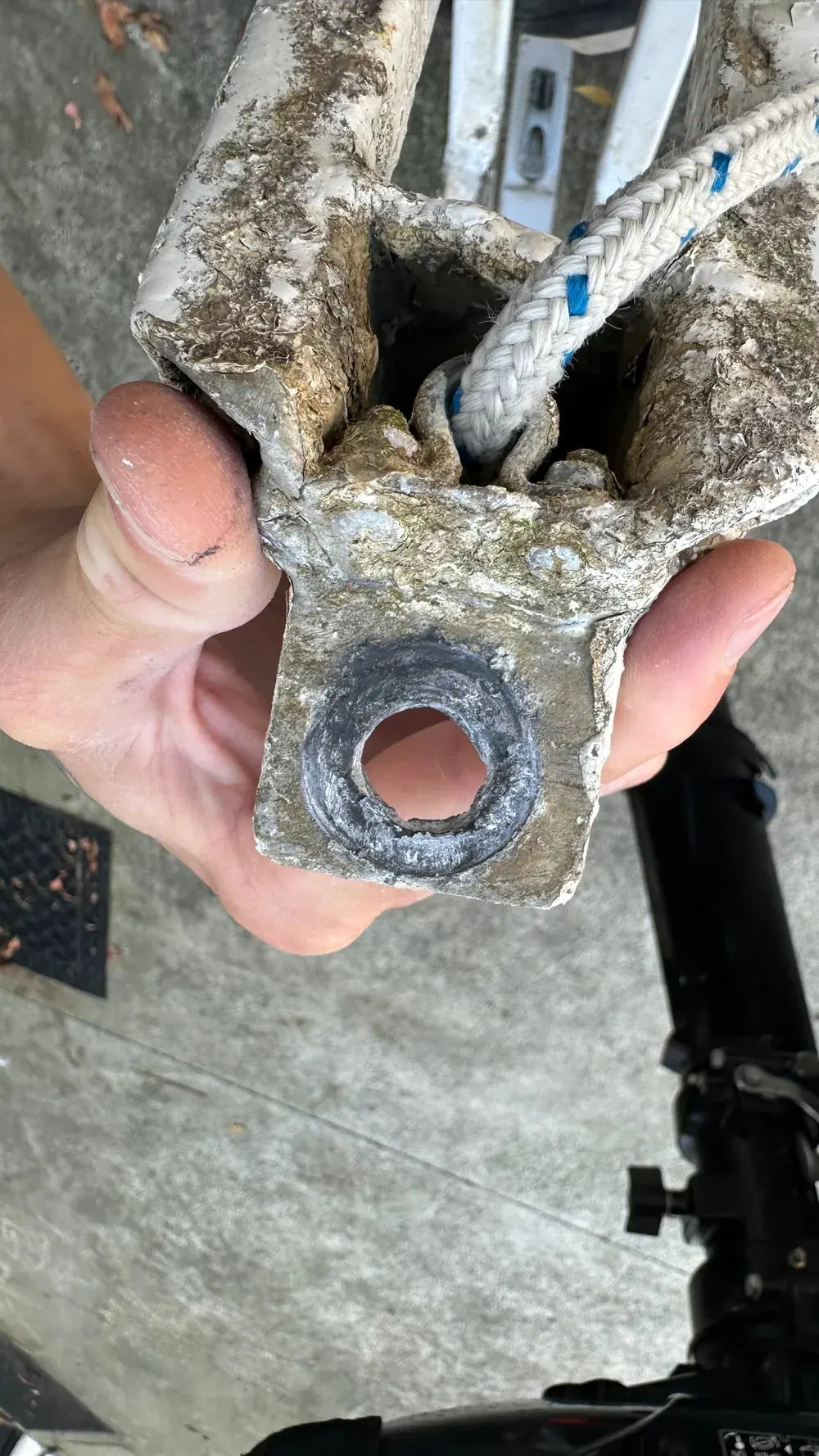
The rudder. The plan was written on the first photo: “Remove, fix, re-spray and a new set of screws and bolts.” Once the assembly was off, one of the fittings turned out to be badly corroded, with its bolt hole worn out of shape. Joe’s fix, in his words: “Filled with a metal composite filler, then redrilled to the correct M10 bolt size, once set.” The rudder blade was resprayed bright white and the old bolts were swapped for new ones.
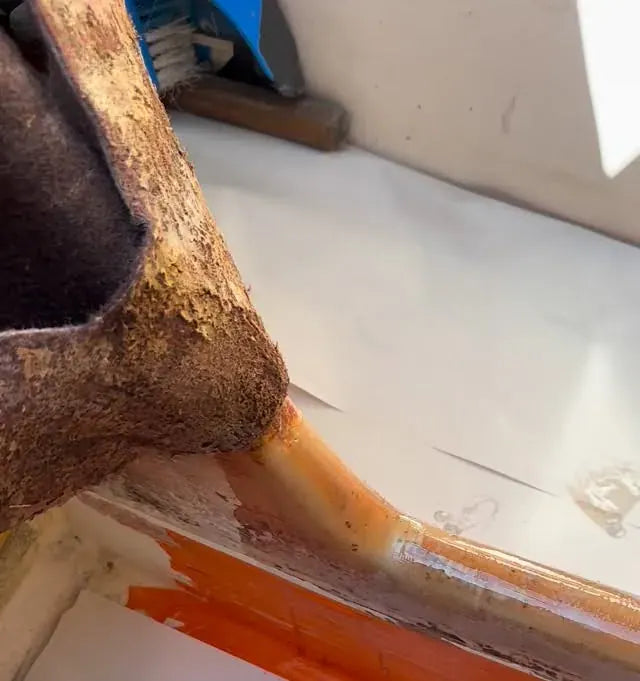
The hull. There was also a hole, and it had to be found before it could be fixed. That meant sanding back inside the hull until the damage showed itself. The caption on the next frame: “Hole found, and repaired with 3 layers of fiberglass.”
Neither job is dramatic. A lot of boat repair is like this: fittings that have worn and water that has found a way in. The skill is in chasing the problem back to sound material before building it up again.

What boat repairs cost
These ranges are from the boat job sheet in Joe’s workshop. Surfboard, ski and foil prices are on the repair price list.
| Boat repair | Guide price |
|---|---|
| Minor gelcoat chip | $150 to $300 |
| Small crack repair | $250 to $600 |
| Impact damage repair | $500 to $2,000 |
| Transom repair | $1,000 to $5,000+ |
| Floor replacement | $2,000 to $10,000+ |
| Structural stringer repair | $3,000 to $15,000+ |
| Full restoration | $5,000 to $30,000+ |
Guide prices. Joe confirms the exact price from your photo.
The ranges are wide because boats are. A chip on a flat white panel is a small job. The same chip on a curved, coloured hull is a colour matching job. With floors, transoms and stringers, nobody knows the full extent until the old material is out. Joe will give you a range from photos and firm it up on inspection. Every quote is free.
Colour matching gelcoat
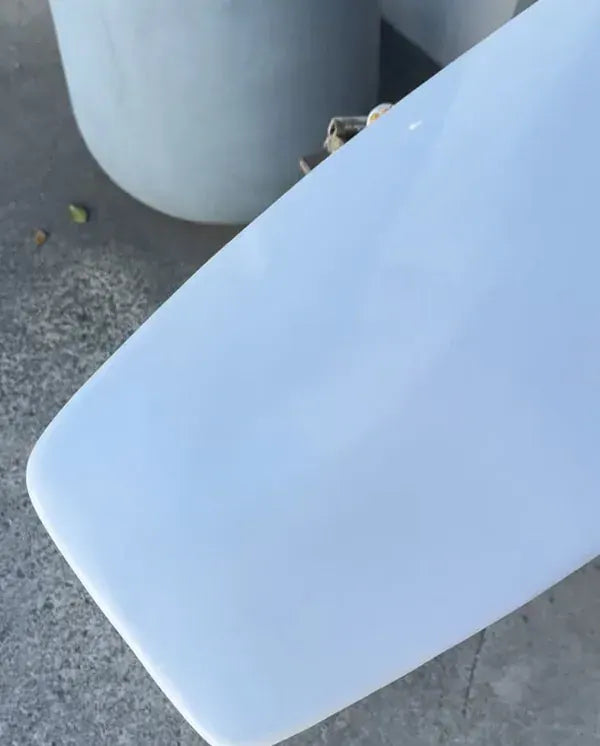
A good gelcoat repair should disappear, and getting the colour right is most of that. White is never just white. An older hull has faded, and the new gelcoat has to be tinted to match what is there now, then cut and polished back into the surrounding surface. Larger areas and full refinishing are covered on the paint and respray page. On metallics and heavy flake, Joe will tell you what is realistic before he starts.

Jet Skis
Jet Ski hulls take a beating: beach landings, pontoon knocks, trailer rollers, and the occasional meeting with another ski. The damage is the same family as on boats: chips on the rails and keel, cracks from impacts, damage to decks and footwells.
Many Jet Ski repairers are mechanics. We are the other half: the hull, the fibreglass and the finish. Jet Skis have their own page, and one owner’s Google review is at the bottom of this one.
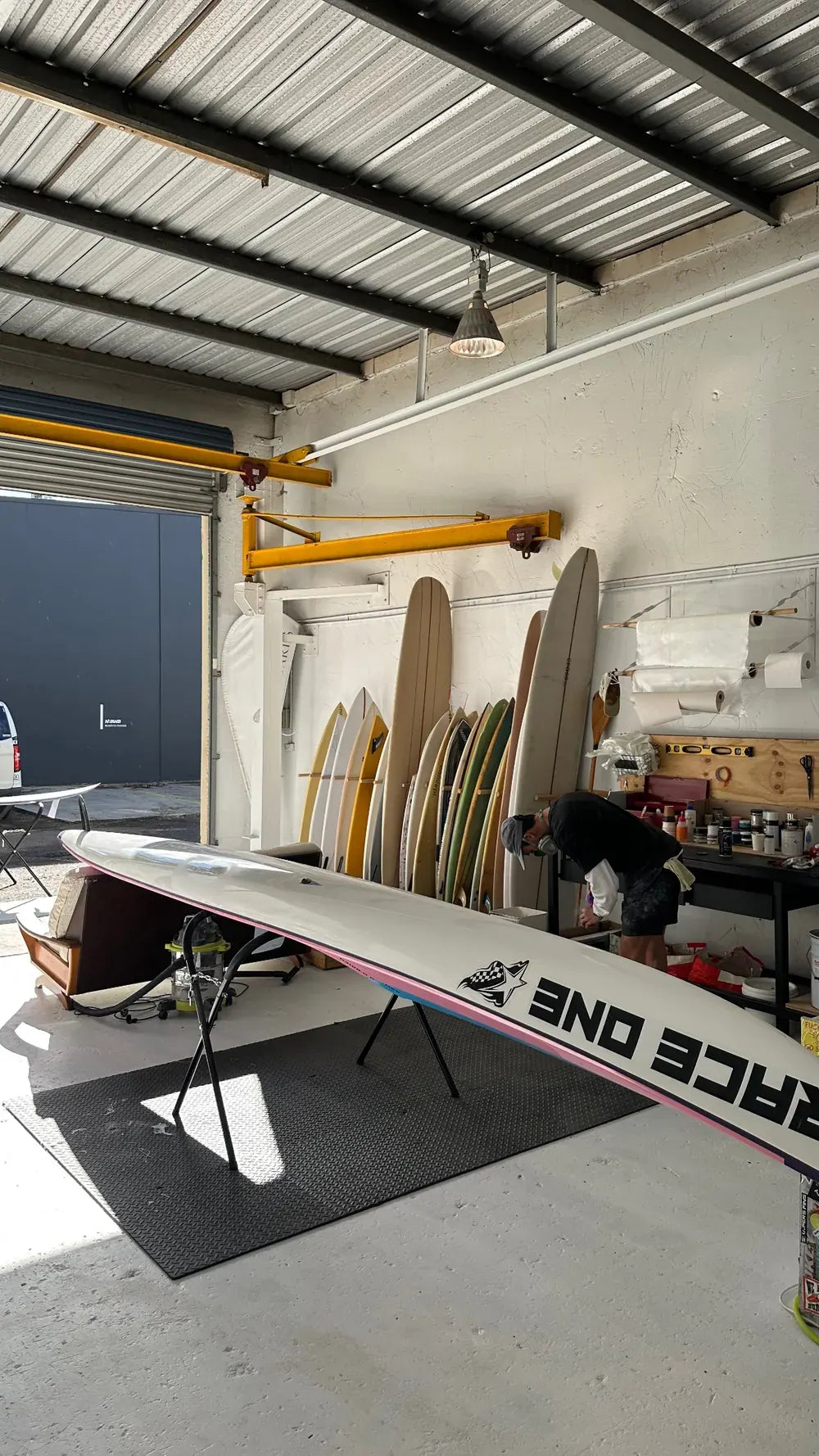
We also repair surf skis, paddle craft and nipper boards. One visiting family had a hole in their son’s fibreglass nipper board fixed in time for their flight home.
Insurance repairs
Insurance work is on our list of services. If the damage is part of a claim, send the photos through and Joe will quote it.

What to send us
- Two or three clear photos of the damage, close up.
- One photo of the whole boat or ski, so we can see where the damage is.
- The make and model, and roughly how old it is.
- What happened, if you know.
Text them to 0422 435 689.
Questions
More answers in the Cross Design FAQ.
Is a gelcoat chip serious?
A chip that stops in the gelcoat is cosmetic, but it is worth sealing so water cannot reach the laminate. If you can see fibres or a rough texture at the bottom of the chip, it has gone through to the fibreglass and needs glass, not just gelcoat.
How much does a gelcoat or fibreglass boat repair cost?
It depends on the damage. The guide prices from our boat job sheet are in the table above, from a minor gelcoat chip up to a full restoration. Joe gives you a range from photos and firms it up on inspection, and quotes are free.
Do you repair Jet Ski hulls?
Yes. We repair the hull, fibreglass and finish of Jet Skis, along with boats, surf skis, paddle craft and nipper boards.
Do you do insurance repairs?
Yes. Send the photos through and Joe will quote the job for your claim.
Beyond surfboards, in our customers' words
What a great business - highly quality work, went the extra mile. My Ski has never looked so good!
Amazing service from Joe! I sent a text about repairing a hole in our son’s Race One fibreglass nipper board whilst on holidays and he responded straight away. He managed to get it fixed within the tight timeframe we had before our flight home, which we really appreciated. The repair looks fantastic and the colour match is spot on. Great workmanship, quick turnaround and really easy to deal with. Highly recommend!


